You Don’t Have to Feel Merry to Make Room for Advent
There is a loneliness that comes from being surrounded by celebrations you can’t bring yourself to enter. Familiar music is playing and the decorations are going up, but when someone asks whether you’re ready for Christmas you can’t help but wonder which answer they actually want. Are they ready to hear your truth? Are you ready to share it?
Perhaps someone is missing this year, or money is tight, your responsibilities have become exhausting, and a family gathering requires more emotional preparation than people know. Perhaps your relationship with church has changed, and words you once sang easily now ring hollow. Or you are just plain burnt out.
None of this means you are doing the season badly.
The pressure to produce a feeling
Christmas can arrive with a lot of expectations. We are supposed to create beautiful gatherings, choose thoughtful gifts, maintain traditions, manage complicated relationships, and somehow still feel joyful and grateful throughout. Spiritual practices themselves can become another measure of performance: did we light the candles, keep up with the readings, find a meaningful activity for the children, feel something sufficiently profound?
A practice that was originally intended to help us pay attention has now become one more thing we are behind on. I wonder what would happen if we began somewhere more honest, not with the Christmas we think we should be having, but with the life we have.
Longing is a place to begin
The Advent we need to make room for does not depend on manufacturing a festive mood. It begins with longing for rest, for companionship, for a world where people have enough. Sometimes that longing takes the form of prayer, sometimes it sounds like frustration, and sometimes we cannot find words for it at all. That ache is worth listening to. It’s real.
When we grieve a relationship, we are acknowledging that it mattered; when we are angry that someone cannot find housing, we are recognizing a need that should not be dismissed; and when we long for a less exhausting life, we may be noticing that the demands placed on us are not sustainable. We do not have to call every painful feeling a gift, but neither do we have to hide those feelings before beginning an honest reflection. The world does not need us to pretend it is already healed.
What might a gentler practice look like?
Perhaps this year you read something short with your morning coffee without turning it into an assignment, light a candle and name the person you miss, or decide that one tradition can rest this year. You can love what it has meant without having the capacity to carry it now.
You might ask yourself, What am I carrying that I have not allowed myself to name? or What would make this season more livable—for me, or for someone near me? The answer may be practical: a smaller gathering, a conversation about spending, an offer of childcare, or permission to leave early. Joy may still find you, and you do not need to distrust it when it comes; a moment of laughter does not betray your grief, just as grief does not disqualify you from celebration.
A companion, not another obligation
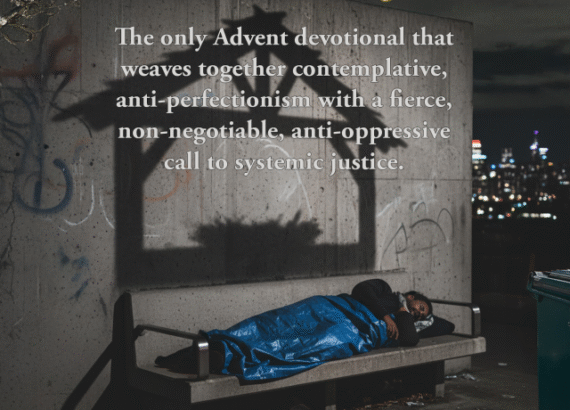
This is part of why I wrote No Room at the Inn: An Advent Call to Justice. Across twenty-five days, the devotional brings scripture, reflection, and blessing into conversation with grief, exhaustion, questioning, and our responsibility to one another, offering a way to engage the season without setting aside either your own experience or your concern for the world.
If that sounds like the kind of company you need this December, I would be glad for the book to accompany you. Explore No Room at the Inn and find your copy, and come with the questions and the energy you have; there is no need to arrive already merry.